Julian Ungar-Sargon

  • Home
  • Theological Essays
  • Healing Essays
  • Podcast
  • Poetry
  • Daf Ditty
  • Deep Dive Ditty
  • Videos
  • Publications
  • Military Service
  • Dominican University
  • Home
  • Theological Essays
  • Healing Essays
  • Podcast
  • Poetry
  • Daf Ditty
  • Deep Dive Ditty
  • Videos
  • Publications
  • Military Service
  • Dominican University
SederPlate.png

Theological Essays

Theological Essays by Dr. Julian Ungar-Sargon.​

Makom, Tzimtzum, and the Collapse of the Horse-and-Rider Parable/Mashal

jyungar May 14, 2026

Makom, Tzimtzum, and the Collapse of the Horse-and-Rider Parable/Mashal

This essay argues that the rabbinic designation of God as Makom—"He is the place of the world, but the world is not His place" (Bereishit Rabbah 68:9)—functions not as a tidy preservation of divine transcendence but as a controlled detonation of spatial metaphysics. Read alongside the Chabad polemic against a literal reading of tzimtzum and in conversation with Elliot R. Wolfson’s apophatic phenomenology, the Midrash discloses a topology in which nothing stands outside divine being even while divine essence infinitely exceeds every manifestation. The familiar parable/mashal of horse and rider, deployed by the Midrash itself, presupposes precisely the dualism it is meant to instruct, and consequently collapses under its own weight. What emerges from this collapse is what I term, with Wolfson, an apophatic cosmism: an ontology of concealed immanence whose clinical analogue is the therapeutic space. Drawing on my earlier work on divine presence and concealment, sacred and profane space, and the patient as sacred text,1–6

Part I argues that the therapeutic encounter is not a neutral interpersonal zone hospitable to occasional religious experience, but a region ontologically suspended within Makom—a place where rupture itself becomes a mode of disclosure.

Part II, an Addendum, descends from this philosophical claim into the operational disciplines of clinical posture, sacred listening, the topology of the clinic, the figure of the wounded healer, and the formation rather than mere training of clinicians.

Tags TE4
Comment

The Covering of Blood from Sinai to the Crematoria

jyungar May 12, 2026

The Covering of Blood from Sinai to the Crematoria

The mitzvah of kisui ha-dam (Leviticus 17:13)—the ritual covering, with earth or dust, of the blood of a slaughtered wild animal or bird—occupies the sixth chapter of Tractate Chullin and is, despite its halakhic modesty, one of the most theologically charged ritual acts the Torah legislates. It does not affect the kashrut of the meat; it is a discrete gesture of honor, performed by a knowing human hand, returning the nefesh that has been taken to the adamah that receives it. This essay reads the mitzvah across four interpretive horizons: its halakhic parameters in Shas and the codes; the reasons offered by the rishonim and acharonim (Rambam’s polemic against ancient blood-cults, Ramban’s ontology of blood-as-nefesh, the Sefer ha-Chinuch’s pedagogy of humility, and Hasidic-kabbalistic readings that see in the covering a small enactment of tzimtzum); the ancient Near Eastern ritual context, in which the biblical legislation defines itself against Hittite, Ugaritic, and Mesopotamian blood practices; and the cardiac theology of Leviticus 17:11, ki nefesh ha-basar ba-dam hi. The essay then turns to the theological obverse—the uncovered blood of Abel that cries from the adamah (Genesis 4:10)—and argues that the twentieth-century crematoria constitute a precisely inverted theology of kisui ha-dam: an industrial anti-covering designed to vaporize blood into ash too dispersed to be received by the ground, buried, or heard as cry. Engaging Fackenheim, Berkovits, Greenberg, Raphael, and the author’s prior work on the dialectic of midat ha-din and midat ha-rachamim, the paper contends that post-Holocaust theology has not yet adequately registered the structural assault that the crematoria mounted on the biblical covenant with the adamah. A closing clinical coda, framed within the author’s project of hermeneutic medicine, asks what gesture of covering might still be recovered at the bedside, in a therapeutic culture that has lost the vocabulary of the sacred at the moment when the blood stops.

Tags TE4
Comment

Dream, Contamination, and the Sanctification of Ambiguity

jyungar May 12, 2026

Dream, Contamination, and the Sanctification of Ambiguity

This article examines a contemporary dream in which I (the dreamer) and a Palestinian interlocutor exchange wine at the border between Israel and Palestine, the dreamer subsequently entering the village and sharing the wine with its inhabitants. The dream invokes the rabbinic category of yayin nesech (forbidden libation wine), the obligation of Kiddush Hashem (sanctification of the divine name), the contemporary clinical category of moral injury, the obsessional structure of halakhic anxiety, and the unsettling possibility that symbolic transgression might constitute a pathway toward peace rather than a betrayal of covenantal fidelity.

Through sustained engagement with classical Jewish theological sources, Hasidic and Kabbalistic mystical traditions, the analytical psychology of C. G. Jung, the ethical phenomenology of Emmanuel Levinas, the post-Holocaust thought of Emil Fackenheim, the relational psychoanalysis of D. W. Winnicott, and contemporary clinical theories of moral injury, I argue that the dream dramatises a profoundly Jewish form of liminality in which holiness emerges not exclusively through separation from the Other but, more precariously, through dangerous relational encounter with the Other.

Drawing upon my prior writings concerning divine concealment, the compromised healer, therapeutic liminality, and the hermeneutic critique of medical reductionism, I propose that moral injury cannot be adequately theorised through modern psychological frameworks alone.

The dream reveals moral injury as rupture within sacred symbolic order itself rather than as a discrete violation of an internally coherent ethical schema.

We conclude that the dream preserves the tragic structure of religious consciousness — namely, that redemption within a fractured world may demand descent into ambiguity without abolishing moral seriousness, and that Kiddush Hashem under conditions of protracted violence may require the courage to remain human precisely where doctrinal certainty collapses.

Tags TE4
Comment

The Wound as Altar: An Anti-Theodicy of the Shoah

jyungar April 24, 2026

The Wound as Altar: An Anti-Theodicy of the Shoah

This essay assembles into systematic form the post-Holocaust theology that has emerged across three decades of my struggle with a cohesive explanation of theodicy in the face of the Tremendum. Its central thesis is that a Jewish theology capable of surviving Auschwitz and an Octiber 7th, must be built on four interlocking commitments: first, an uncompromising anti-theodicy that refuses every attempt to explain the Shoah theologically, and most emphatically the attempts by certain Jewish theologians to locate its cause in the victims' alleged deficiencies — Zionism, Bundism, Haskalah, assimilation, insufficient piety, inadequate Torah study; second, the Piaseczner Rebbe's practice of teaching-without-explanation within the Warsaw Ghetto, epitomized by his 1942 marginal note conceding that the present suffering exceeded all prior Jewish historical precedent; third, the Lubavitcher Rebbe's theological move, according to which divine contraction (tzimtzum) precedes and enables the very possibility of moral failure, tempered by the Rebbe's own rejection of every theodicy for the Shoah; and fourth, Elliot Wolfson's apophatic discipline, in which divine essence functions as a regulative linguistic limit rather than an ontological substrate, and in which post-Holocaust faith must remain linguistically wounded.1,2,3 Drawing on the author's own articulated framework of hermeneutic medicine, therapeutic tzimtzum, Shekhinah consciousness etc, the essay proposes a Judaism after Auschwitz grounded in wounded address without theodicy and in compassionate presence in place of explanation. The poems Ashen Soul (2019) and The Insanity of the Last Century (2025) are adduced as the author's own lyric articulation of this theology: the heavens disqualified as witnesses, the earth tainted with ash, and the hands of the healer — rather than the catechism of the theologian — becoming the altar.

Tags TE4
Comment

Bettmann Archive/Getty Images

The Inner Light and the Outstretched Hand

jyungar April 14, 2026

The Inner Light and the Outstretched Hand

This essay examines the theological foundations of Quaker humanitarian activism during World War II, with particular attention to the work of the American Friends Service Committee (AFSC) and British and Australian Quaker networks in aiding Jewish refugees and civilian internees. Drawing on core Quaker doctrines—the Inner Light, the testimonies of equality and nonviolence, and the prophetic witness tradition—the essay argues that Quaker humanitarian action was not merely philanthropic but constituted an integrated theological praxis: a living embodiment of their understanding of the divine in every human person. The essay situates this analysis within the broader historical context of wartime internment, with attention to the Tatura internment camp in Victoria, Australia, where Jewish refugees—many of them German and Austrian nationals displaced by Nazi persecution—were held under conditions that drew Quaker response. The essay concludes that the Quaker model offers an enduring paradigm for theologically grounded ethical witness in circumstances of systemic injustice.

Tags TE4
Comment

The Spiral and the Sparks: from Eternity to the Bedside

jyungar March 17, 2026

The Spiral and the Sparks: from Eternity to the Bedside

This essay undertakes a systematic genealogy of the concept of time across four interconnected intellectual traditions: Greek philosophical cosmology, the Hebrew Bible, rabbinic halakhic and aggadic literature, and Jewish mystical thought culminating in Lurianic Kabbalah. The trajectory moves from the cyclical and ateleological temporality of Platonic and Stoic cosmology through the covenantal and eschatological time of the Hebrew prophets, through the liturgically structured sacred time of the rabbinic imagination, and into the theosophic temporality of the Zohar and the Lurianic mythic drama of tzimtzum, shevirat ha-kelim, and tikkun. Central to this analysis is the monumental scholarly contribution of Elliot R. Wolfson, whose essay 'From Sealed Book to Open Text: Time, Memory, and Narrativity in Kabbalistic Hermeneutics' discloses the profound manner in which kabbalistic textuality and temporality are co-constitutive: time, for the kabbalist, is not a neutral container of events but a dimension of the divine life itself, structured by the erotic dialectic of concealment and disclosure, and opened through the interpretive act. The essay concludes with a synthetic account of what might be called 'spiral temporality'—a distinctively Jewish hybrid of the linear and the cyclical in which memory, narrative, and messianic hope converge.

Tags TE4
Comment

Shabbat “Beyond Time” and the Physics of Time

jyungar February 17, 2026

Shabbat “Beyond Time” and the Physics of Time

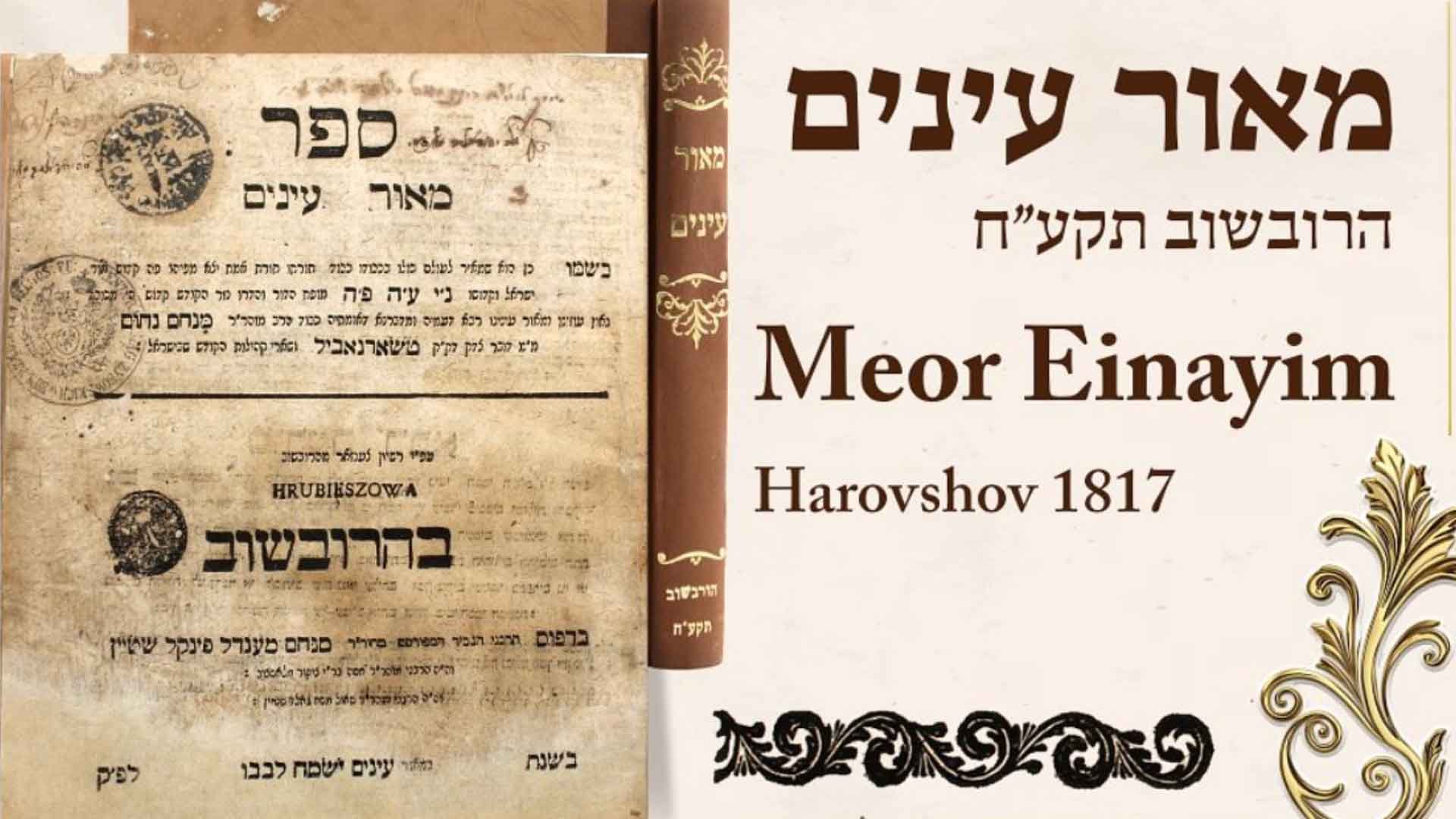
This article examines the concept of Shabbat as “beyond time” (le-ma’alah min ha-zeman) through a sustained engagement with Zoharic Kabbalah and Hasidic thought, followed by a carefully delimited bridge to Richard Feynman’s physics of time. Beginning with the Zohar’s architecture of “two Shabbatot” and its association of the upper Shabbat with the sefirah of Binah, the analysis traces how Hasidic masters—including the Maggid of Mezritch, R. Menahem Nahum of Chernobyl (Meor Einayim), R. Shneur Zalman of Liadi, R. Levi Yitzchak of Berditchev, the Sefat Emet, and the Mei HaShiloach—transformed Zoharic metaphysics into a lived phenomenology of temporal transcendence. Drawing on the scholarship of Arthur Green, Elliot Wolfson, Michael Fishbane, Eitan Fishbane, Moshe Idel, and Rivka Schatz-Uffenheimer, the article reconstructs a coherent Hasidic theology of Shabbat-time. It then offers Feynman’s treatment of relativity and the path-integral formulation as analogical—not identical—resources for understanding why “one linear story” is not the deepest description of reality, either in physics or in the mystical apprehension of sacred time.

Tags TE4
Comment

Trees, Divine Presence, and Higher Power

jyungar February 1, 2026

Trees, Divine Presence, and Higher Power

Shel Silverstein's The Giving Tree (1964) has long been read as a simple parable of unconditional giving and human desire. This comprehensive analysis proposes a far deeper reading: the tree as an embodiment of the Shekhinah, the feminine aspect of divine immanence in Kabbalistic theology, whose boundless generosity mirrors the mystical dynamics between God and creation. By juxtaposing this Kabbalistic reading with the spirituality of the 12-Step Program—the foundation of Alcoholics Anonymous and related recovery movements—this essay explores fundamental questions about divine-human interaction, selfhood, ethical responsibility, and the nature of therapeutic transformation. Drawing extensively upon recent scholarship in Jewish mysticism, contemporary therapeutic theology, and integrated frameworks for understanding Shekhinah consciousness in clinical practice (1-3), we demonstrate how these seemingly disparate paradigms illuminate complementary aspects of spiritual engagement with forces beyond the self. The analysis synthesizes insights from Lurianic Kabbalah, Chassidic psychology, phenomenological approaches to healing, and clinical applications of mystical concepts to develop a comprehensive framework for understanding both literary allegory and lived spiritual practice. We propose that both The Giving Tree and 12-Step spirituality represent variations on fundamental human experiences of dependence, transformation, and encounter with transcendence, though they diverge significantly in their theological assumptions, anthropological implications, and practical applications. The integration of these frameworks offers rich resources for contemporary therapeutic practice, addiction treatment, and spiritual direction.

Tags TE4
Comment

Blackstar: Symbol, Withdrawal, and The Refusal of Consolation

jyungar January 22, 2026

Blackstar: Symbol, Withdrawal, and The Refusal of Consolation

David Bowie's Blackstar represents far more than a farewell album; it constitutes a profound meditation on mortality that resonates with the deepest currents of Jewish mystical theology. This analysis examines Bowie's final work through the interpretive frameworks of Lurianic Kabbalah, post-Holocaust thought, and the phenomenology of sacred presence-in-absence. The album's refusal of consolation, its staging of ritual without guarantee, and its insistence on the dignity of opacity all echo theological traditions that have grappled with divine concealment (hester panim) and the presence of the sacred within suffering. Drawing on the tzimtzum doctrine of divine self-contraction, the Shekhinah theology of divine presence in exile, and contemporary frameworks of hermeneutic medicine, this essay argues that Blackstar offers a model for confronting mortality that neither falsifies death's opacity nor abandons the human need for meaning. The work emerges as a form of sacred art that creates space for what we might call 'Being-With-Nonbeing'—a discipline of presence that transforms existential terror into embodied reverence.

Tags TE4
Comment

Beyond the Garments: the Grammar of Divine Names, Human Projection, and the Post-Holocaust Condition

jyungar January 22, 2026

Beyond the Garments: the Grammar of Divine Names, Human Projection, and the Post-Holocaust Condition

This essay develops a Jewish process theology grounded in the principle אֵלָיו וְלֹא מִדּוֹתָיו ("to Him and not to His attributes"). Beginning with Exodus 6:3, it traces the evolution of divine naming from the Hebrew Bible through rabbinic interpretation, Kabbalah, Hasidism—especially the theology of the Lubavitcher Rebbe—and post-Holocaust Jewish thought. Drawing on the scholarship of Moshe Idel, Michael Fishbane, Elliot Wolfson, Joseph G. Weiss, and Eli Rubin, the essay argues that divine names function as historically conditioned interfaces between divine presence and the human psyche. While divine essence remains inaccessible, revelation unfolds relationally within history, trauma, and ethical demand. This trajectory yields a distinctively Jewish form of process theology capable of sustaining faith after catastrophic rupture.

Tags TE4
Comment

Divine Names, Human Psyche, and the Emergence of Process Theology

jyungar January 19, 2026

Divine Names, Human Psyche, and the Emergence of Process Theology

This study examines the theological, psychological, and mystical dimensions of Exodus 6:3, wherein God declares to Moses: "I appeared to your ancestors as El Shaddai, but by My name YHWH I was not known to them." Far from a simple historical marker distinguishing patriarchal from Mosaic religion, this verse emerges as a hinge text that anticipates what modern theology would term "process thought"—the understanding that divine-human relationship unfolds dynamically through history. Drawing upon biblical scholarship, classical midrash, Kabbalistic hermeneutics, modern process theology, and post-Holocaust thought, this essay argues that divine names function not as static descriptors of an unchanging divine essence but as relational disclosures calibrated to the evolving psychological and spiritual capacity of humanity. The transition from El Shaddai to YHWH charts a movement from divine containment to divine exposure, from promise to presence, from assurance to encounter with rupture and ethical demand. This trajectory, already implicit in biblical and rabbinic sources, reaches full articulation in the work of post-Holocaust theologians who understand God as suffering history's catastrophes alongside humanity. The essay integrates the hermeneutical insights of Michael Fishbane, the historical scholarship of Moshe Idel, the philosophical analyses of Elliot Wolfson, the mystical interpretations of Shaul Magid, the Hasidic scholarship of Joseph Weiss, and the theological synthesis of Louis Jacobs.

Tags TE4
Comment

The Sacred Marriage and the Messianic Consummation

jyungar January 16, 2026

The Sacred Marriage and the Messianic Consummation

This essay traces the hermeneutic transformation of the Song of Songs from ancient erotic poetry to the theological foundation of Chabad-Lubavitch messianism. Beginning with the canonical tensions between peshat and derash that have animated Jewish interpretation since antiquity, we follow the trajectory through which erotic imagery became the privileged vehicle for expressing the most intimate dimensions of divine-human encounter. The midrashic identification of the Temple as marital chamber, elaborated through Kabbalistic theosophy into a cosmic drama of sefirotic union, provides the conceptual architecture upon which Hasidic and ultimately Lubavitcher thought constructs its eschatological vision. Central to this analysis is the development of Shekhinah consciousness—the evolution of divine presence from biblical dwelling motifs through Kabbalistic systematization to its contemporary manifestation in therapeutic and healing encounters. Drawing upon the work of Moshe Idel, Elliot R. Wolfson, Shaul Magid, Andrea Weiss, Eli Rubin, and my own research on the therapeutic space as locus of divine indwelling, this study argues that the messianic theology of the seventh Lubavitcher Rebbe represents not merely a continuation but a radical rupture within this trajectory—a hermeneutic move that transforms anticipation into proclamation, futurity into presence, and the bridal chamber of exile into the consummated union of redemption.

Tags TE4
Comment

The Wagons of Indictment

jyungar January 8, 2026

The Wagons of Indictment

This essay offers a theological-critical reading of the Zohar's interpretation of the wagons (agalot) sent by Joseph to Jacob in Genesis 45:27, arguing that the Zoharic text functions not merely as narrative exegesis but as an indictment of patriarchal failure.

Drawing upon Rav Shagar's post-modern theology of rupture and absence, I contend that the wagons encode an accusation: Jacob sent Joseph into danger without adequate protection, violating the fundamental ethical obligation of levaya (accompaniment) that underlies the law of eglah arufah. This reading challenges hagiographic interpretations of Jacob and instead locates him within a framework of culpable silence—the failure of parental responsibility that generates trauma without recourse to repair.

The essay extends this theological critique to the events of October 7, 2023, when the Nova Music Festival massacre occurred on Simchat Torah while diaspora communities danced in their synagogues, unaware that Israeli youth were being slaughtered in the fields near Re'im.

I argue that our liturgical celebration at that precise moment constitutes a spiritual eglah arufah—a case of blood spilled while the elders were occupied elsewhere. This represents not merely historical tragedy but theological scandal: the absent father replicated in the absent God, the failure of the patriarch mirrored in the failure of the community.

Tags TE4
Comment

Revelation and the Conquest of Demonic Forces

jyungar January 4, 2026

Revelation and the Conquest of Demonic Forces

This essay examines the radical mystical theology of revelation articulated in the Meor Eynayim, the seminal Hasidic commentary composed by Rabbi Menachem Nachum of Chernobyl (1730-1797). Through careful textual analysis of the parashat Yitro sections, this study argues that the Meor Eynayim fundamentally reconceptualizes Torah not as a corpus of texts requiring intellectual mastery but as an experiential mode of divine knowing—da'at—that emerges through and within the vessel of sacred fear (yirah). The essay demonstrates how this reconceptualization challenges conventional understandings of free will, repositions the encounter at Sinai as an ongoing cosmic drama, and provides a therapeutic framework for conquering what the text terms the "demonic forces" (sitra achra) that impede human flourishing. Drawing upon the work of Arthur Green, Elliot Wolfson, and other contemporary scholars of Jewish mysticism, this analysis situates the Meor Eynayim within broader kabbalistic and Hasidic trajectories while highlighting its distinctive contributions to Jewish theological anthropology. The essay concludes by exploring the implications of this mystical hermeneutic for contemporary approaches to religious experience, spiritual formation, and the healing arts.

Tags TE4
Comment

Neither Object Nor Abyss

jyungar December 30, 2025

Neither Object Nor Abyss

Jewish theology sustains a persistent tension between two spiritual grammars: personal encounter with God as an addressable "Thou," and mystical union in which the self is attenuated or absorbed into an impersonal infinite. This essay argues that while rational Orthodoxy protects divine personalism through transcendence and restraint, and Kabbalah often radicalizes transcendence into theosophical or absorptive mysticism, Hasidism—particularly in its existential and devotional streams—reorients mystical depth toward relational responsibility rather than dissolution. Drawing on classical scholarship in Jewish mysticism and Hasidic studies, and extending these insights into the domains of clinical ethics and addiction recovery, the essay proposes that the I–Thou relation constitutes not merely a theology of prayer but an ethical discipline of presence. In therapeutic contexts, this discipline manifests as tzimtzum, sacred not-knowing, and the refusal of premature explanation—practices that preserve the irreducibility of the patient as subject. The twelve-step recovery tradition is examined as a parallel spiritual trajectory in which the "Higher Power" evolves from an external, interventionist deity toward an internalized source of wisdom and moral orientation. The I–Thou relation is thus reframed as a foundational ethic for relational medicine and transformative recovery, capable of sustaining meaning, responsibility, and human dignity under conditions of suffering and uncertainty.

Tags TE4
Comment

Psalms: Prayer, Praise, and Tikkun

jyungar December 22, 2025

Psalms: Prayer, Praise, and Tikkun

The Book of Psalms (Sefer Tehillim) stands at the center of Jewish devotional life, shaping religious psychology, liturgy, and spiritual imagination for over two millennia. Psalms are simultaneously literary, musical, therapeutic, communal, mystical, and theological. This essay argues that Psalms constitute a uniquely Jewish mode of prayer that transforms emotional life into sacred language, enacting a process of tikkun—repair or restoration—on the psychic, communal, and cosmic planes. Drawing on biblical scholarship, rabbinic theology, medieval and kabbalistic traditions, and modern psychology, this work examines the Psalms as a technology of meaning-making, identity formation, trauma recovery, and divine encounter. Particular attention is given to Rabbi Nachman of Breslov's Tikkun HaKlali—the ten psalms he designated as a comprehensive remedy—and its relationship to contemporary therapeutic practice. The paper integrates concepts of therapeutic tzimtzum, Shekhinah consciousness, and hermeneutic medicine to propose that Psalmic prayer functions as a form of what might be termed 'linguistic surgery'—operating on consciousness through sacred language to restore wholeness where fragmentation has occurred. The analysis concludes by exploring how the Psalms create a grammar of hope that sustains the Jewish imagination through exile and rupture, proposing that Psalmic prayer remains one of Judaism's most enduring engines of spiritual resilience.

Tags TE4
Comment

Sacred Healing, Shattered Vessels

jyungar December 16, 2025

Sacred Healing, Shattered Vessels

The struggle with compulsive behavior has been addressed by human communities throughout history, though the frameworks for understanding and treating such struggles have varied dramatically across cultures and eras. In contemporary Western society, twelve-step programs—particularly Sex Addicts Anonymous (SA) and Sex and Love Addicts Anonymous (SLAA)—have emerged as primary resources for those seeking recovery from sexual addiction. These programs, descended from Alcoholics Anonymous, offer a structured spiritual path toward sobriety and psychological healing. Yet within traditional Judaism, particularly in the mystical tradition of Breslov Hasidism, an alternative framework for addressing sexual compulsion has existed for over two centuries: the Tikkun HaKlali and its associated practices of Tikkun HaBrit (rectification of the covenant).

Tags TE4
Comment

Surrender as Ontological Revelation

jyungar December 14, 2025

Surrender as Ontological Revelation

This essay examines Rabbi Rami Shapiro's theology of surrender as articulated in Surrendered—The Sacred Art (2019) and Recovery—The Sacred Art (2009) in dialogue with the Kabbalistic dialectic of being (yesh) and non-being (ayin). Drawing upon the author's published work on powerlessness as ontological revelation, therapeutic tzimtzum, and the yechida as Higher Power, this analysis argues that Shapiro's "uncovery" framework and his Taoist-inflected understanding of surrender find both resonance and productive tension with the specifically Kabbalistic vocabulary of bittul (self-nullification), ayin (sacred nothingness), and the five-fold soul structure of Jewish mystical anthropology. While both approaches reject naive theism and locate the ground of recovery in interior depths rather than external intervention, they diverge on questions of theological particularity, practical methodology, and the relationship between surrender and recognition. The essay concludes by proposing a synthetic framework wherein surrender constitutes not merely a psychological relinquishment of control but an ontological revelation—the collapse of the illusory yesh of constructed selfhood into the generative ayin from which authentic being emerges.

Tags TE4
Comment

The Yechida as Higher Power

jyungar December 14, 2025

The Yechida as Higher Power

This essay articulates a distinction between my formal theological work—which engages the scholarly apparatus of Elliot Wolfson's phenomenology, Jonathan Eybeschütz's radical mysticism, and the Lubavitcher Rebbe's teachings on divine concealment—and my personal, experiential understanding of 'higher power' as it functions in spiritual practice. While my academic writing explores the objective metaphysics of tzimtzum, the dialectic of being and non-being (yesh and ayin), and the theological implications of divine contraction for post-Holocaust thought, my lived spirituality locates the 'higher power' not in the transcendent Ein Sof but within the innermost dimension of my own soul: the yechida. This essay explores how these two registers—the theological and the personal—relate without collapsing into identity, arguing that the yechida represents both the divine spark within and the authentic locus of spiritual contact that recovery and contemplative practice require.

Tags TE4
Comment

Cosmic Sound, Sacred Number, and the Architecture of Musical Consciousness

jyungar December 10, 2025

Cosmic Sound, Sacred Number, and the Architecture of Musical Consciousness

Music occupies a paradoxical space in human culture and consciousness. It is simultaneously material and immaterial, scientific and spiritual, mathematical and ecstatic. Every civilization throughout human history has sought to explain why music moves us so profoundly, why it organizes emotion with such precision, and why it appears to resonate with something beyond the merely physical world. In the Classical period of Western civilization—stretching from the Pythagoreans through Plato, Aristotle, Plotinus, and into the medieval scholastics—music was understood not merely as an art form or entertainment, but as a metaphysical principle. It corresponded to nothing less than the architecture of the cosmos itself.

Tags TE4
Comment
  • Theological Essays
  • Older
  • Newer

Julian Ungar-Sargon

This is Julian Ungar-Sargon's personal website. It contains poems, essays, and podcasts for the spiritual seeker and interdisciplinary aficionado.​